
Founder Voice
Rest Became a Social Class Marker
Published on
July 15, 2026
By
Kyrie Rogers

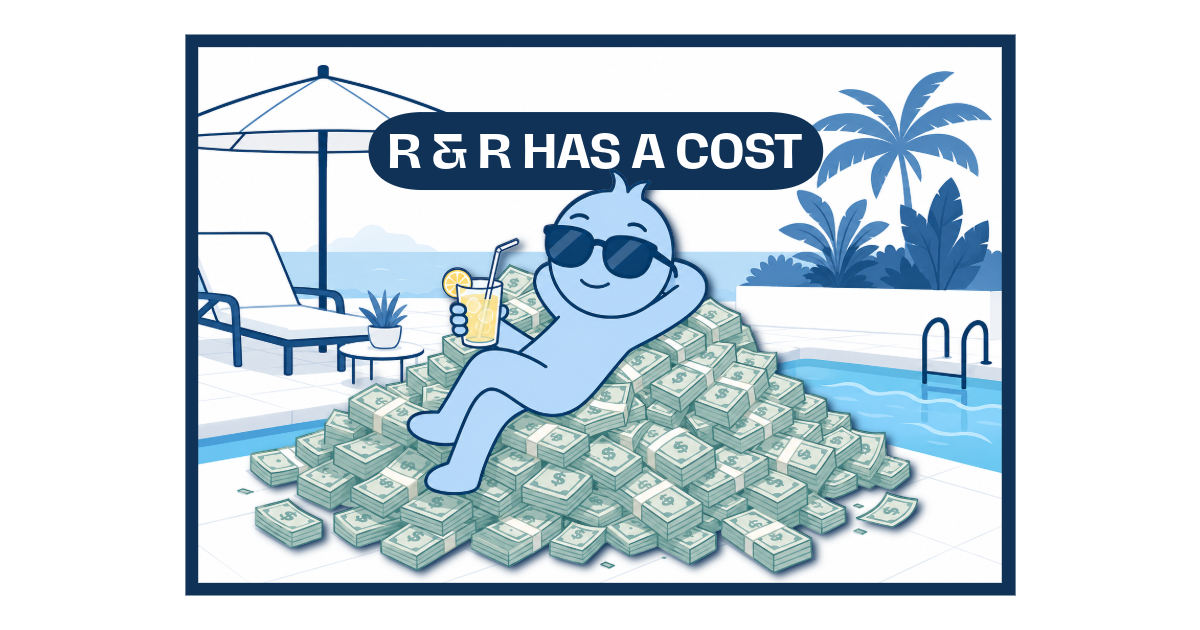
Rest used to be the baseline. Now it’s a status symbol. Last year, 23% of American workers took zero vacation days.1 Not a long weekend, not a Friday, nothing. And it isn’t because they didn’t want the time. Nearly half of employees expect to leave vacation days unused, most of them pointing at a workload that makes stepping away feel impossible.2
Somewhere along the way, rest stopped being something a person is owed and became something a person has to afford.
Time off is sorted by class now
Start with the structure. The United States is the only advanced economy that guarantees no paid vacation by law, none.3 Rest here isn’t a right, it’s a benefit, and benefits sort by paycheck. The higher up you sit, the more time you’re granted and the more cover you have to actually use it. The lower down you go, the less you get, until “paid time off” is a phrase that happens to other people.
So the first quiet truth is this: rest is already a luxury good, priced and distributed like one. Some people inherit a week in the sun. Others inherit a shift they can’t leave.
And the people who “have” it still can’t take it
Here’s the part that should bother everyone, including the ones with the generous policy. Having the days isn’t the same as being able to use them. Unlimited PTO looks great in the offer letter and quietly becomes unlimited guilt, because nobody tells you the number, only that everyone’s watching.
The workload is the enforcement mechanism. Microsoft’s 2025 research found employees getting interrupted every 2 minutes, up to 275 times a day, with 80% saying they don’t have the time or energy to do their job well.4 You cannot rest on top of that. You just relocate it. The laptop comes to dinner. The Slack ping follows you to the beach. The vacation becomes a place you answer emails with a better view.
The villain here isn’t the person who won’t unplug, and it isn’t the manager who feels guilty too. It’s a system that made the work impossible to leave, then called your exhaustion a personal failing.
What does a coordination layer have to do with rest?
A coordination layer is the connective software that keeps your tools, people, and decisions in sync without anyone chasing status, so work keeps moving even when you step away from it. That’s the role Chambiar plays, and it’s the difference between rest you have to earn back with overtime and rest you can actually take. The Chambiar team is opening early access now, and you can get in before launch.
The Chambiar team has built the product on a plain idea: you should be able to leave without the building falling down. When the system can see the work, hold the context, and surface what actually matters, stepping away stops being a risk you pay for later. Blue keeps the threads connected so your absence isn’t a gap someone has to cover in a panic. It’s just Tuesday, handled.
You worked all year. The honest question is where the time went and whether any of it was yours. That’s what the Chambiar team has built the Work Receipt to show, a free, two-minute look at where your week really landed.
Because rest was never supposed to be a reward for surviving the system. It was supposed to be part of being alive. That’s Reclaim Health: your evenings, your weekends, the right to log off without a negotiation. A luxury good made public again.
Sources
1 CNBC, “Nearly a quarter of American workers didn’t take any of their vacation days this year,” Oct 2025. cnbc.com
2 SHRM, “Nearly Half of Employees Expect to Leave Vacation Time Unused,” 2025. shrm.org
3 Center for Economic and Policy Research (CEPR), “No-Vacation Nation, Revised,” 2023. cepr.net
4 Microsoft, 2025 Work Trend Index, “Breaking down the infinite workday.” microsoft.com