
AI & Work
Someone Is Always Watching You
Published on
August 16, 2026
By
Kyrie Rogers

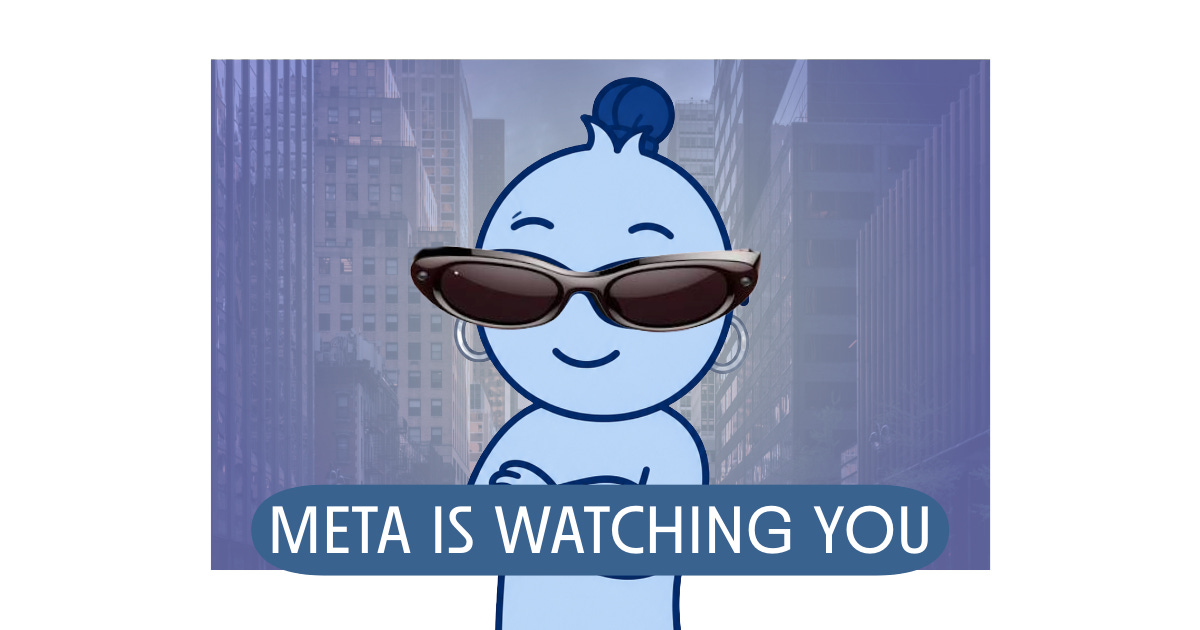
Somewhere in the world right now, someone is being filmed and doesn’t know it. That’s not a paranoid line, it’s a market. Meta’s smart glasses hold roughly 70% of it, and they’ve earned a nickname nobody at the company wanted: “pervert glasses.”1 Users found ways to disable the small light meant to warn people they’re being filmed, then used the glasses to secretly record strangers, at the gym, on the street, during unsolicited pickup attempts, and post the footage online.1
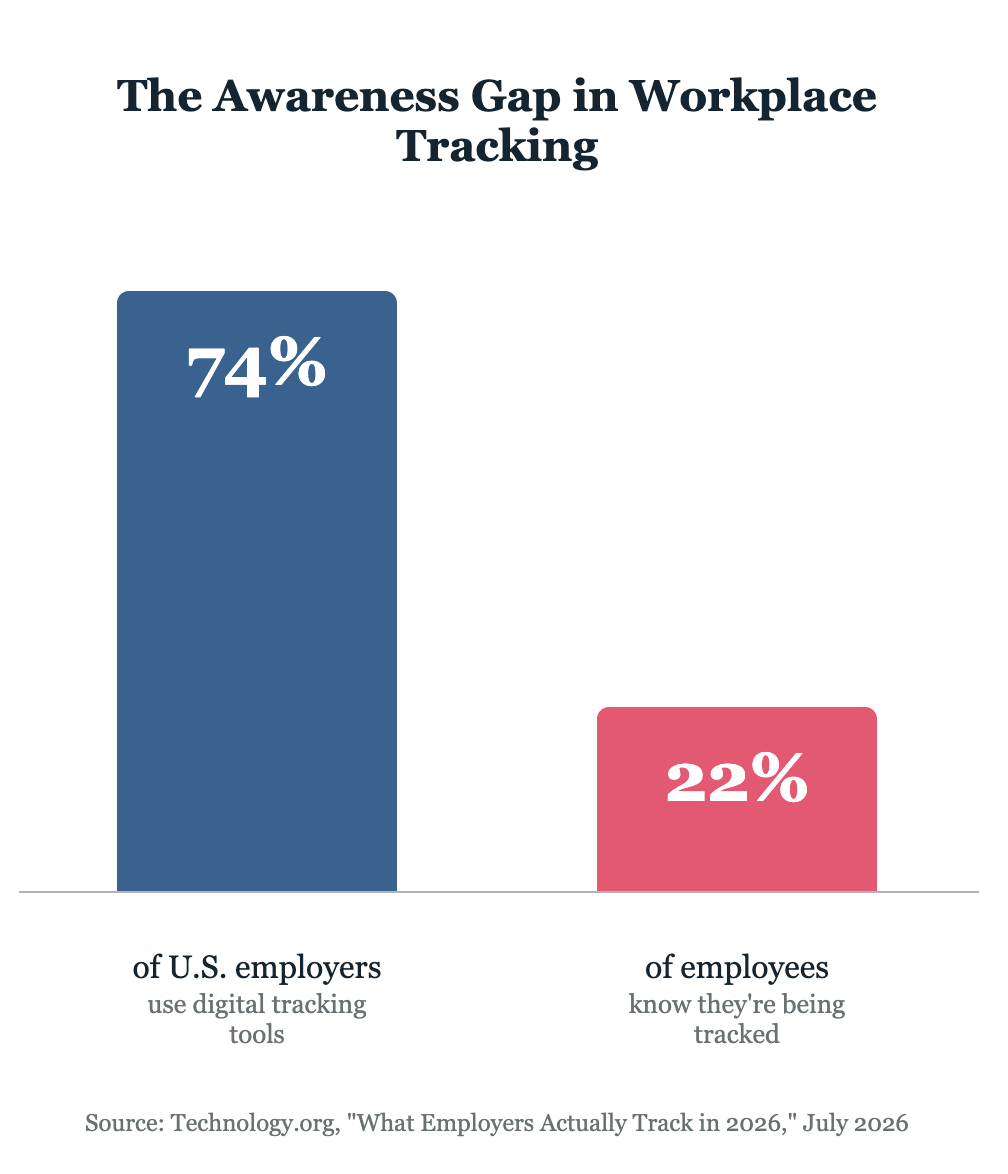
It’s not just strangers on the street, either. 74% of U.S. employers already use some form of digital tracking on their own people, and only 22% of employees know it’s happening.2 That’s roughly two out of every three monitored workers, watched, and never told.
Now put a different kind of watching next to it. Transparent workplace monitoring, the kind where employees know exactly what’s tracked and can see their own data, produces a 22% average productivity increase.3 Same basic premise, seeing what someone is doing, and already the two versions are headed in opposite directions.
Meta’s version kept getting worse. Contractors reviewing flagged clips reportedly saw people undressing and using the bathroom, recorded without their knowledge.4 Three U.S. senators warned the technology could enable “stalking, harassment, and targeted intimidation.”4 France’s privacy regulator called it a risk of surveillance that’s “almost invisible and omnipresent.”5 Several European countries are now weighing outright bans. Covert workplace monitoring, meanwhile, the kind employees only find out about after the fact, produces 2.3 times higher quit intent.3 Both versions of “watching without asking” end the same way: with the people being watched pulling away.
The backlash on Meta’s side sharpened into something more specific when the company launched a Kylie Jenner-branded collaboration in June 2026. Women online pushed back hardest, and for a clear reason: most of the documented non-consensual recordings are of women, filmed by men who used the glasses’ hidden-in-plain-sight design to do it.6 A protest collective plastered London with posters calling them “predator glasses.”6 A content creator who says she was filmed without her knowledge posted a video that reached 2.8 million views, arguing the celebrity campaign existed to make the men already wearing these glasses look normal instead of alarming.7 Even commenters pointed out the irony that Jenner herself has said she hates being recorded without consent.7
Surveillance versus observation
Companies don’t use a camera. They use a dashboard. Same idea, seeing what someone is doing, built with consent instead of around it. When companies disclose what they’re collecting and why, 85% of employees accept it, and only 13% object at all.8 Done well, it pays for itself 3 to 10 times over in the first year.8 Same starting point, but it turns into either a Senate letter or a return on investment, depending entirely on one thing: whether the person on camera, or in the dashboard, was ever let in on it.
It’s tempting to read the Meta story as a lesson about cameras, or AI, or wearables, it isn’t. The lesson is about consent, and about who gets to see the data once it’s collected.
Meta’s glasses fail because the person being recorded has no idea it’s happening and no say in it. The workplace tools that actually work succeed because the opposite is true: people know what’s tracked, they can see their own numbers, and the purpose is stated up front instead of discovered later. Take away consent and shared access, and even the most well-intentioned visibility tool starts to feel like the glasses. Add them back, and even something as invasive-sounding as “employee monitoring” turns into something people will accept, and in most cases, into something that quietly makes the business more money.
There’s a further step most companies skip. It’s not enough to just tell someone they’re being observed, the data has to come back to them in a form they can actually use. A dashboard that only reports up to a manager is still surveillance with better manners. A dashboard that also hands the employee their own hours back, where the time went, what actually moved, what didn’t, is something else entirely: it’s the person reclaiming their own time and energy instead of just being measured for someone else’s benefit. Same data. Different owner. That’s the whole difference between being watched and being seen.
“Nobody minds being seen,” says Kyrie Rogers, CEO of Chambiar. “People mind being watched.”
What this means for how you build visibility into your own team
Before adding any tool that promises to show you what’s happening across your work, the question worth asking isn’t does this give me visibility. It’s does the person on the other end of this get to see the same thing I do. That single distinction is the difference between a tool people quietly route around, or quit over, and one that actually earns the trust it needs to work.
That’s the whole design principle behind the free Work Receipt: it shows you where your own hours are going, and what it costs you.
What gets reclaimed here isn’t more data. It’s the difference between visibility that people resent and visibility people actually want, once they’re finally let in on it too.
The Chambiar team has built exactly that. You connect your tools, with your permission, and the Work Engine surfaces what’s actually happening across all of them in one place. Blue, your AI coworker, helps you understand what it’s showing you and can take work off your plate. You can send, produce, edit, and join meetings, all from inside Chambiar, so you reclaim your time, your energy, your visibility, and your effort instead of losing it to ten different tabs.
Chambiar is currently in prelaunch. Join the early-access list.
This argument runs every week. Read it first on Substack.
Sources
1 Slashdot and Los Angeles Times, “Privacy Backlash Explodes Against Meta’s Smart Glasses,” August 9, 2026. slashdot.org
2 Technology.org, “What Employers Actually Track in 2026: Inside the Monitoring Stack,” July 2026. technology.org
3 CurrentWare, “How to Monitor Employees Without Violating Privacy,” 2026. currentware.com
4 Yahoo News, “Democrats Press Meta Over Facial Recognition Plans for Smart Glasses.” yahoo.com
5 PetaPixel, “Meta Smart Glasses Face Calls for Bans Across Europe Over Privacy Concerns,” August 4, 2026. petapixel.com
6 HuffPost, “Kylie Jenner In Hot Water Over Creepy Meta Glasses.” huffpost.com
7 The Big Lead, “Meta Is Giving Kylie Jenner Meta Glasses to Influencers for Free,” 2026. thebiglead.com
8 Employee-Monitoring.net, “Employee Monitoring Statistics 2026,” March 2026. employee-monitoring.net