
What could I possibly mean by this?No one is expected to know how much their company spends on meetings.
AI is no longer just a tool. It's becoming infrastructure. Shaping how work gets done, how performance is evaluated, and increasingly, how people get ahead. AI adoption is moving at the speed of light in 2026, but it isn't moving at an equal pace. The people exercising the most caution toward AI are statistically the ones using it the least, and that imbalance is where the risk starts.
Apprehension is heightened in groups already subjected to discrimination. As a queer woman of color and the founder of Chambiar AI, I see hesitation as pattern recognition. According to Pew Research's 2025 study on workers and AI, 52% of U.S. workers are worried about how AI will be used in the workplace. 32% think it will lead to fewer job opportunities for them in the long run. Lower and middle income workers are more likely than upper income workers to say this. Those income groups are not racially neutral.
Pew's companion data on AI exposure shows that only 15% of Black workers and 13% of Hispanic workers are in jobs with the highest exposure to AI, compared with 24% of Asian workers and 20% of White workers. That sounds protective in the short term. In practice, it means less hands-on experience with AI as it becomes the default infrastructure of work. The people with the least daily exposure are also the people with the most reason to question AI's fairness, given its history with bias.
This isn't a skill gap or a motivation problem. March 2026 research from Lean In shows women are less likely than men to be regular AI users on the job. Men are 22% more likely to use AI daily or constantly at work (33% vs. 27%). They're 7% more likely to have ever used AI at work (78% vs. 73%). Women are nearly twice as likely as men to predict AI will cost women their jobs. Manager support skews too: 37% of men say their manager encourages them to use AI, compared to 30% of women. Men are 27% more likely to be praised for using it.
Right now, AI adoption is being driven by speed, experimentation, and visible outputs. Adopting AI in the workplace requires more than curiosity. It requires time and space to experiment, psychological safety to be bad at something new, access to tools, and support from leadership. Those opportunities are not evenly distributed. The people moving fastest are the ones publicly trying tools, integrating them into their workflows, and showing measurable productivity gains, because they're given the room to. This is where the gap deepens, and visibility becomes more important than ever.
There's another layer to this that rarely gets discussed. AI doesn't just improve through data. It improves through use. AI gets applied, integrated, and refined inside companies, shaped by the people who engage with it most. Over time, AI will reflect participation.
Caution is valid. AI can reinforce bias, make flawed decisions at scale, and prioritize efficiency over fairness. Being skeptical is being informed. But disengagement has consequences. If you're not engaging with AI, you're not shaping its logic. You're not benefiting from its leverage. You're falling behind.
Artificial Intelligence is quickly becoming the next industrial revolution. One that marginalized communities can't afford to be excluded from, because participation isn't optional. It's power.
We saw this happen with the rise of the internet. The people who learned it early built platforms, companies, and careers that still dominate today. Everyone else didn't just join later. They entered a landscape already shaped by someone else's rules.
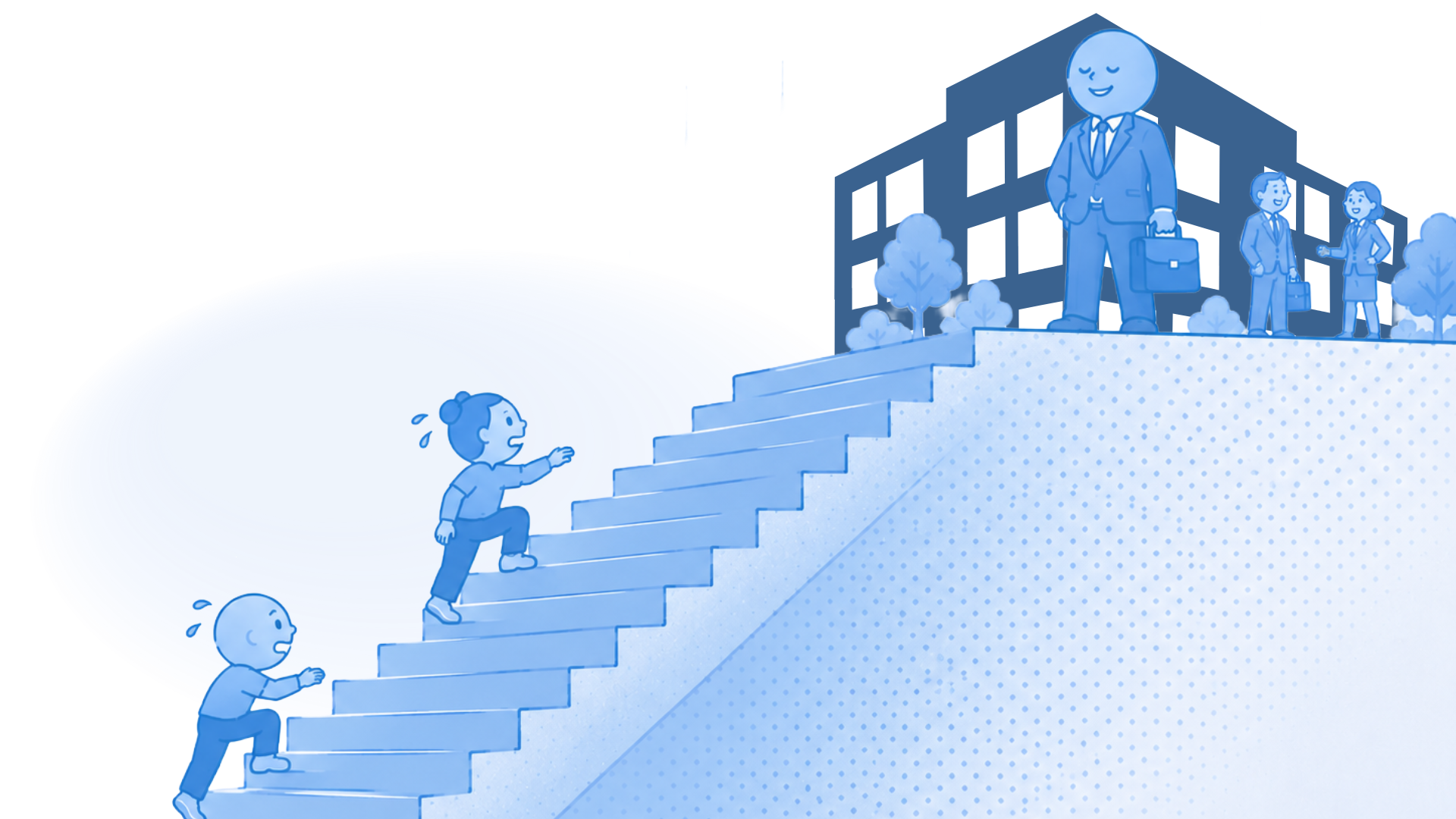
The cost of showing up late will not stop at lost opportunity. It will extend to a loss of influence for marginalized communities. If the gap holds, the future of work won't just move faster, it will narrow. Hiring signals will favor AI-assisted output. Performance will be measured against systems trained on a limited set of behaviors. Decision-making will increasingly reflect the people who shaped those systems early.
Over time, that compounds into something harder to reverse. Fewer opportunities, less visibility, less say in how work is defined, rewarded, and advanced. Not because of a lack of talent, but because of a lack of representation in the systems making those calls.
If you're not using AI, you're handing over the power to decide how work works, who gets seen, and who gets ahead.
This kind of writing is what you'll find on our Substack each week. Deeper takes on the future of work, from the people building it.
Kyrie
The AI Gap Between the Privileged and the Marginalized Is Here
By Kyrie Rogers
WORK'S
JOIN PRE-LAUNCH